It’s one thing to hear the story of rock ‘n’ roll; it’s another to be fully immersed in it.
“Amplified” is a new exhibit in Las Vegas hoping to bring fans of the guitar jamming, drum banging music genre to Illuminarium, an attraction about a mile west of the Strip.
Eventgoers walk into an L-shaped room and stand under a sky of 50 projectors. The show envelops visitors in a sea of vibrant photos, videos and animations.
The audio smoothly transitions between seven decades of rock ‘n’ roll history. Actor Kevin Bacon narrates. The clips play on every inch of the 360-degree theater, including the floor.
“We approached one of our partners, David Rockwell, who’s done every Nobu restaurant in the world,” says Alan Greenberg, the CEO of Illuminarium Experiences. “He didn’t want this to be a box or a sphere design. He wanted to have a surprise where people could walk around a corner to see things.”
The storytelling weaves through the evolution of rock ‘n’ roll with backstage videos, recording studio clips, muscle cars, the fight for civil rights and larger-than-life hair. Keep your phone at the ready if you want to capture moments of your favorite artists, because they fly by in the strum of a guitar chord.
“The story is not only told through narration,” says executive producer Brad Siegel. “The story is told through the song choices. Every one of the songs needed to work hard enough to reinforce and fill out the story.”
There’s a dance break to “Pink Pony Club” by Chappell Roan halfway through.
Siegel, the founder of Brand New World Studios, started working on the project two years ago. In conjunction with Illuminarium Experiences and Rolling Stone Magazine, he oversaw the production combing through 10,000 photographs and 250 archival clips.
The culmination includes a carousel of all 1,300 Rolling Stone covers chronologically displayed.
“That shows the impact on pop culture,” Siegel says. “Being on the cover of Rolling Stone is, as we say, the Mount Olympus of a career. Doing the Rolling Stone interview is the apex of a career. You’ve made it.”
Images zip by swiftly
More than 300 artists are included in the show including Taylor Swift. Before you walk into the gnomon-shaped theater, you stand in a room with the names of every singer and band snaking along the wall.
Swift appears nine times during the show: four times in the 50 minutes leading up to the magazine cover rollout, four magazine covers (one in the 2000s and three in the 2010s) and then once during the ending credits.
Can you spot the two Swift covers in the image below?
Long live the Eras Tour with our enchanting book
“A lot of people have affected rock ‘n’ roll,” Greenberg says. “A lot of people have been affected by rock ‘n’ roll. We wanted to broaden the audience to tell the overall story.”
The experience opened to the public Wednesday. Tickets start at $39. The hope is to expand “Rolling Stone Presents: Amplified” to more locations, possibly including Scottsdale, New York, Montreal, Sydney and Melbourne.
Don’t miss any Taylor Swift news; sign up for the free, weekly newsletter This Swift Beat.
Follow Bryan West, the USA TODAY Network’s Taylor Swift reporter, on Instagram, TikTok and X as @BryanWestTV.
Looking to broaden the stories on your bookshelves this year? Mark your calendars: A new day celebrating diverse reading is on the horizon.
The nonprofit We Need Diverse Books (WNDB) is launching its inaugural “We Need Diverse Books Day” April 3 to highlight the importance of access to inclusive reading, the organization announced exclusively to USA TODAY.
WNDB was inspired by a viral Twitter hashtag in 2014 in response to an all-white, all-male children’s author panel at BookCon. Now, 10 years after its grants and programming launched, the organization will celebrate by donating 10,000 titles to schools and libraries across the country.
What is ‘We Need Diverse Books Day’?
WNDB is encouraging readers of all ages to pick up a book that features the stories of marginalized communities. Across social media, the organization will recommend titles and resources on where to obtain copies.
You can get involved by requesting a diverse book at your local library or buying from your independent bookstore and sharing your recommendation and review on social media using #DiverseBooksDay, WNDB says. And for every $10 donated, the nonprofit says it will provide a diverse book to an underresourced school.
“WNDB has helped change the landscape of children’s literature, but diverse books are for everyone and for readers of any age,” Roxane Gay, “Bad Feminist” author and WNDB board member said in a statement. “We can all grow and benefit from reading books that reflect the diversity of our world.”
‘We Need Diverse Books Day’ highlights need for inclusive reading
The inaugural reading day comes as book bans are on the rise across the country. PEN America’s study of over 1,000 of the most commonly banned books found 44% include people and characters of color and 39% contain LGBTQ+ people and characters.
Dhonielle Clayton, WNDB board chair and author of “Blackout,” stressed the importance to young readers of seeing themselves represented in books.
“Growing up, I was a huge bookworm, but I rarely saw a girl like me on a book cover,” Clayton said in a statement. “I know firsthand as an author and educator that there is power in diverse literature to build self-affirmation in young readers and to encourage them to dream big. These children deserve to know that their lives matter, both on and off the page, and they can grow up to become lifelong readers.”
A 2023 study by nonprofit First Book found that students spend more time reading when educators add new, diverse books to their classrooms. And while 99% of surveyed educators agreed that a diverse classroom library is crucial, only 58% said their library collection is as diverse as their students are.
The “faith and tireless work” of WNDB supports authors of color and gets diverse books into the hands of readers, says Angie Thomas, the bestselling author of “The Hate U Give.” Thomas won the organization’s Walter Dean Myers Grant in 2015. In addition to grants, WNDB hosts awards, campaigns to champion diverse reading, mentorship and “adopt a library” programs.
“Winning that grant allowed me to purchase a laptop so that I could write my debut novel ‘The Hate U Give’ and launch my career,” Thomas said in a statement. “WNDB’s programs have now supported hundreds of writers like me, helping us tell our stories so that we can share them with readers everywhere.”
Start your diverse reading now: 10 new releases by Black authors from thrillers to rom-coms
Clare Mulroy is USA TODAY’s Books Reporter, where she covers buzzy releases, chats with authors and dives into the culture of reading. Find her on Instagram, subscribe to our weekly Books newsletter or tell her what you’re reading at [email protected].
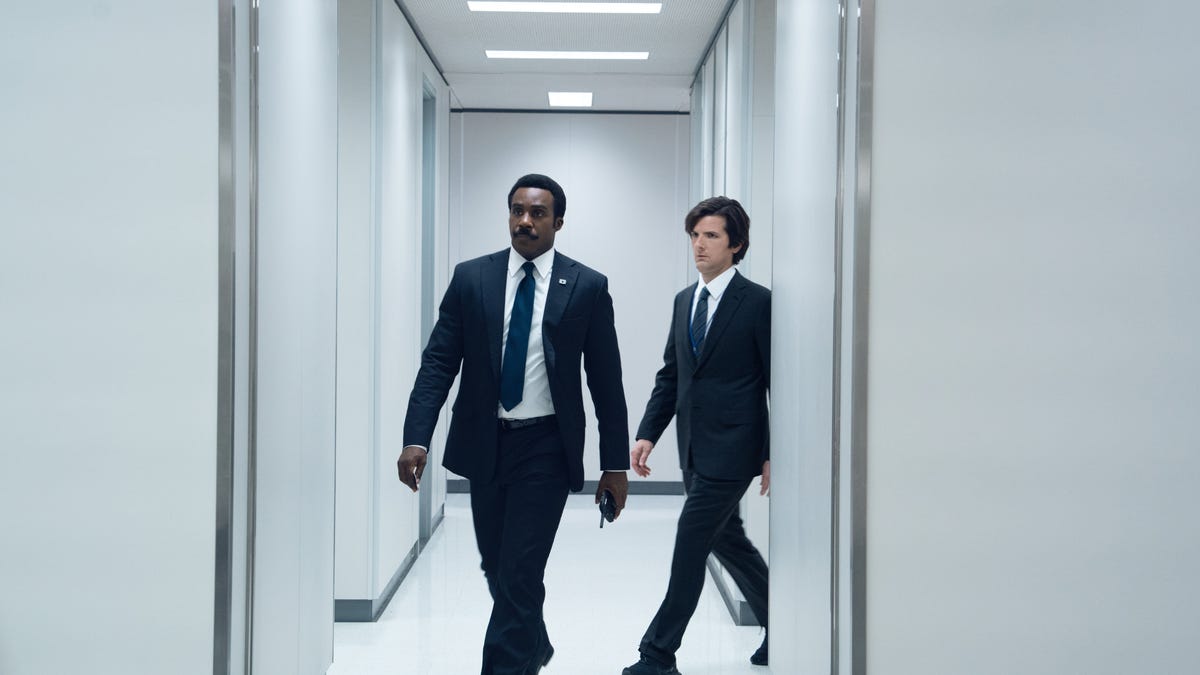
‘Severance,’ Adam Scott and Britt Lower take over NYC’s Grand Central
“Severance” stars, Adam Scott, Britt Lower and others surprised fans with a pop-up ahead of the second season’s debut on Jan. 17.
The second season of smash-hit series “Severance” is almost over.
The Emmy Award-winning Apple TV+ show follows Mark Scout (Adam Scott) as he leads a team at Lumon Industries whose employees have undergone a severance procedure that surgically divides their memories between their work and personal lives.
The second season sees Mark and his friends learn “the dire consequences of trifling with the severance barrier, leading them further down a path of woe,” according to the series description on Apple TV+.
Here’s what you need to know about Season 2 of “Severance,” including how many episodes the season has and when new episodes come out.
Watch Severance on Apple TV+
When does the next episode of ‘Severance’ come out?
The next episode of “Severance” Season 2, titled “The After Hours,” is set to be released in the U.S. on Thursday evening, March 13, and globally on Friday, March 14.
While Apple TV+ lists the show’s release dates as Friday, multiple reports indicate new episodes are made available in the U.S. on Thursdays around 9 p.m. ET.
In an emailed statement to USA TODAY Thursday, Apple TV+ said that since it is a global streaming service and not a linear network, it does not promote exact tune-in times week-to-week.
How many episodes are in ‘Severance’ Season 2?
The second season will contain 10 episodes, according to the streamer. Season 1 had nine episodes.
‘Severance’ Season 2 episode schedule
The second-to-last episode is set to drop on Thursday evening in the U.S., which sets up the finale for Thursday evening, March 20.
We occasionally recommend interesting products and services. If you make a purchase by clicking one of the links, we may earn an affiliate fee. USA TODAY Network newsrooms operate independently, and this doesn’t influence our coverage.
Gabe Hauari is a national trending news reporter at USA TODAY. You can follow him on X @GabeHauari or email him at [email protected].
USA TODAY TV critic Kelly Lawler shares her top 5 TV shows she is most excited for this year
Before the losing tribe in the third episode of “Survivor” Season 48 headed to tribal council, it was a fairly normal episode, for in all intents and purposes.
For the third episode, titled “Committing to the Bit,” viewers spent time with each of the three tribes – Vula, Lagi and Civa – learning a bit more about the individual castaways stranded in Fiji and their motivations in playing the game for $1 million.
But after an immunity challenge in which two tribes emerged victorious, a series of events unfolded, including a well-played “shot in the dark,” which had longtime host Jeff Probst taking in a “historic” tribal council that sent one player home.
Season 48 of the long-running reality competition series has already been full of twists and surprises, and Wednesday’s episode was no exception.
Here’s what to know about this week’s episode of “Survivor” Season 48.
Need a break? Play the USA TODAY Daily Crossword Puzzle
Who went home on ‘Survivor’ Season 48, Episode 3?
During the immunity challenge, some players in each tribe were blindfolded and one member was a caller, directing them through an obstacle course and solving a puzzle to win immunity and supplies for the tribe.
Only the Lagi and Civa tribes won the immunity challenge, as they have in the two previous weeks, leaving Vula to face tribal council and vote out a member for the third time. But before they headed to tribal council, the Lagi tribe were forced to send three people, one from each tribe, on a a special “journey” with an unknown fate.
Bianca Roses, Justin Pioppi and Kamilla Karthigesu from the Lagi, Vula and Civa tribes, respectively, were selected. Once on the “journey,” each contestant was forced to play a game of chance with dice. If they rolled a certain number of dice with flames, they could gain an extra vote, but if they rolled a certain number with skulls, they lost a vote at the next tribal council.
Of the three, only Kamilla was victorious, meaning Bianca and Justin both lost their votes. And as Justin is a member of the losing Vula tribe, he was heading into the four-person tribal council with no vote.
Certain that she was the target, Mary Zheng played her “shot in the dark,” or a one-in-six chance for safety in exchange for her vote at tribal council. And for the second time since the feature was added into the show, Mary was lucky, guaranteeing her safety for the night.
And since Justin lost his vote, that meant that only Sai Hughley and Cedrek McFadden could cast votes. After they tied twice with one vote each for Sai and Justin, Probst told them about the historic nature of the evening. Typically in “Survivor,” after two tie votes, the players up for elimination cannot vote and it is up to the rest of the tribe to talk it out and come to a consensus. But because Justin and Mary had lost their votes and Sai was up for elimination, only Cedrek could make that decision.
After making rivals Mary and Sai promise to get along, Cedrek sent home Justin, a 29-year-old pizzeria manager from Winthrop, Massachusetts.
He became the third Vula member in a row to exit the game, leaving only three people remaining on the tribe.
Who went home last week on ‘Survivor’ Season 48?
The immunity challenge saw the three tribes – Vula, Lagi and Civa – competing in a water-based obstacle course where they had to work together to balance a buoy with poles over a balance beam, jump and swim through the ocean and shoot balls into a floating basket.
The Civa and Lagi tribes were guaranteed immunity and the reward of fishing gear to bring back to camp. Already a member down, the Vula tribe lost the immunity challenge for the second episode in a row, did not win their flint back and made another appearance at tribal council.
At first, Cedrek McFadden thought he might be on the chopping block due to his poor performance during the challenge, but the tide swiftly shifted to either Kevin Leung, whom other players identified as a strategic gamer. The majority alliance also schemed to have Sai Hughley play her immunity idol, therefore flushing it from the game.
In the end, Kevin was blindsided by the majority alliance (save Mary Zheng, who had lost her vote) and the 34-year-old finance manager from California became the second person voted out of the game.
‘Survivor’ Season 48 cast: Meet the 18 new castaways hoping to win $1 million in Fiji
How to watch ‘Survivor’ Season 48
Season 48 of “Survivor” will air Wednesdays at 8 p.m. ET on CBS and stream on Paramount+ for subscribers of the Paramount+ with Showtime plan.
Episodes can be streamed the next day for subscribers of any Paramount+ plan.
The previous 47 seasons of the show are all available to stream with a Paramount+ subscription.
Watch every season of Survivor with Paramount+
Who is the host of ‘Survivor’?
Jeff Probst has hosted all 48 seasons of the show, which has been on the air since 2000. He also serves as an executive producer.
‘Survivor’ 50: Jeff Probst talks casting all-stars season, whether he’d play ‘Traitors’
Who won ‘Survivor’ Season 47?
Rachel Lamont won Season 47 of “Survivor,” in a 7-1-0 vote against Sam Phalen, who got one vote, and Sue Smey.
Lamont, a 34-year-old graphic designer from Southfield, Michigan, was originally on the Gata tribe and became the fifth woman ever to win four individual Immunity Challenges in a season.
Where is ‘Survivor’ filmed?
While “Survivor” previously took contestants to remote locations around the world, from the Pearl Islands to the Philippines and Guatemala, the show has been filmed in the Mamanuca Islands in Fiji for the past 15 seasons.
We occasionally recommend interesting products and services. If you make a purchase by clicking one of the links, we may earn an affiliate fee. USA TODAY Network newsrooms operate independently, and this doesn’t influence our coverage.
Ralphie Aversa shares USA TODAY film critic Brian Truitt’s must-see films for 2025 including “Snow White” and “Superman.”
“Lilo & Stitch” lovers, get ready for another Hawaiian rollercoaster ride.
The first trailer for Disney’s live-action remake of the 2002 sci-fi comedy was released on Wednesday. The nearly two-and-a-half-minute clip shows many of the original film’s iconic scenes, including Lilo’s astonished discovery of the mysterious blue alien Stitch.
“He’s so cute and fluffy,” says Lilo, played by 8-year-old Maia Kealoha.
“Lilo & Stitch” follows sisters Lilo and Nani, who unwittingly befriend the alien fugitive “Experiment 626” after the extraterrestrial’s crash landing on Earth. Lilo adopts 626 from an animal shelter — under the impression he’s a dog — and subsequently renames him Stitch.
Nani is portrayed by actress Sydney Agudong in the upcoming remake. Her casting led to fan backlash early on in the film’s production, with several social media users criticizing the contrast between Agudong’s light skin tone and the deeper complexion of the animated character of Nani.
Those concerned with accurate Asian American, Native Hawaiian and Pacific Islander representation also questioned whether Agudong — who was born and raised on Kaua’i — has native Hawaiian ancestry, like Nani’s character. NBC News reported she is “multiracial with Hawaiian ancestry,” though a few social media users cast doubt on this claim.
However, there were few traces of that controversy online following the trailer’s release, as many fans shared their excitement for the live-action film.
“Lilo & Stitch” is set to be released in theaters on May 23.
Join our Watch Party! Get USA TODAY’s movie and TV recommendations in your inbox
‘Lilo & Stitch’ remake wins over fans with ‘phenomenal’ trailer
Movie fans and Disney devotees were seemingly delighted by the new “Lilo & Stitch” trailer on Wednesday.
“The live-action Lilo & Stitch genuinely looks phenomenal,” @DrewDisneyDude wrote on X. “THIS is how you tell a new version of a beloved story. 👏”
“Stitch just looks so real. I’m blown away, and Lilo looks adorable,” @BellaLoveNote commented. “Any movie set in Hawaii is always a happy time for me and I can’t wait to see all the experiments!! Definitely one of my most anticipated of the year.”
“I think we can all admit live action Lilo & Stitch does look like fun,” @BorkEternal wrote.
But some were not willing to let bygones be bygones when it came to Agudong’s casting in the Disney flick.
‘Lilo & Stitch’ remake controversy: Fans slam casting of light-skinned actress as Nani
“The actress for Lilo is so perfect while they got that white woman playing Nani….” @thebeldamm wrote.
“SO white people get mad with Disney when Ariel was played by a Black woman and Snow White was played by a Latina woman,” wrote @AlejandroThatch, referring to Halle Bailey and Rachel Zegler’s roles in the live-action remakes of “The Little Mermaid” and “Snow White,” respectively.
The user added: “BUT they are completely FINE with a white woman in a horrible tan playing Nani in Lilo & Stitch when Nani is an Indigenous young woman 🤨.”
Anthony Mackie says Harrison Ford went all in on his Marvel stunts
Anthony Mackie reveals how Harrison Ford refused stunt doubles and went all in for “Captain America: Brave New World.”
A newly announced documentary is alleging to expose the “truly heartbreaking” end to Marvel comic book genius Stan Lee’s life. But first, its filmmakers need financing to release it.
Film producers are seeking $300,000 from a Kickstarter campaign to finish the project, “Stan Lee: The Final Chapter.”
Lee, the cultural icon responsible for many of the most popular superheroes in comic books and movies, died in November 2018 at the age of 95. “The Final Chapter” will detail the “scandal” around Lee’s final years using “never-been-seen-footage” to detail “how mistreatment, duplicity and conflict plagued” the fan-beloved creator, according to a release from the uncompleted film.
The film is alleging it will expose Lee’s closest confidants, “including several who exploited Lee’s declining health and age, while profiting off his name and likeness.”
The Kickstarter campaign focuses on Jon Bolerjack, a comic book artist, filmmaker and assistant to Lee who became a “fixture of his inner circle” while filming, according to the Kickstarter page. Bolerjack “is ready to share” the story.
“Jon gained unprecedented access and filmed everything he saw,” the Kickstarter campaign description reads. “What he uncovered was a thriving market where Stan’s signatures and memorabilia were converted into huge piles of cash and rival hucksters double-crossed each other to control Stan’s fortune.”
Bolerjack “witnessed scandal and misconduct during his time by Lee’s side up until his death, culminating in the struggle for control over Lee’s legacy and fortune (or lack thereof),” the release states, adding that the film “is a story of betrayal, mistreatment and ultimately, redemption.”
“Before his passing and as seen in the documentary, Lee gave Bolerjack his blessing to use the footage and create a film that could be shared with the world,” the release states.
The tangled drama around Lee’s life burst into the public in 2018 when a Los Angeles court sided with lawyers representing Lee’s daughter, J.C. Lee, who successfully sought an elder abuse restraining order against a former Lee manager, Keya Morgan. Journalist Abraham Riesman’s 2021 warts-and-all-biography “The Rise and Fall of Stan Lee” detailed the final years of Lee’s life and the lawsuits and failed business ventures that plagued it.
Stan Lee documentary release date: Is ‘The Final Chapter’ streaming?
There is no planned release date for “The Final Chapter.”
Over the last four years, Bolerjack and other film producers have invested “hundreds of thousands of dollars of (their) own money putting together the documentary,” according to a press release for the film. The Kickstarter campaign is needed for production costs and finishing the movie, with nearly $38,000 raised two days into the 30-day window with a $300,000 goal.
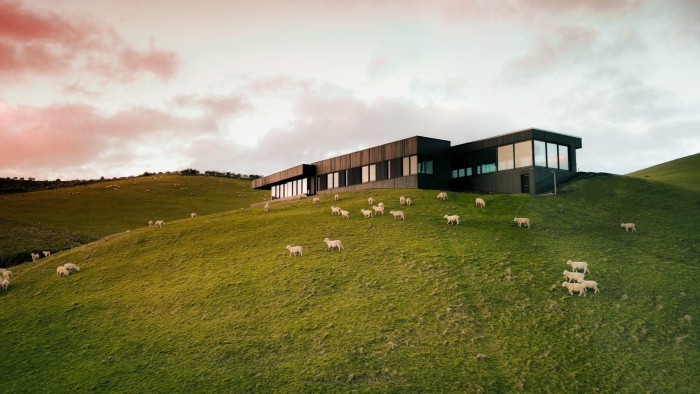
Australian-born, Singapore-based entrepreneur Matt Chapman considered many countries when looking for a place to buy an isolated retreat. “I wanted to find the most magical place possible,” he says. That place was Parihoa, whose minimal outline and slick, dark-stained timber facade is a dramatic contrast to the rolling hills and rugged clifftops of the landscape where it resides.
It is one of several sleek modern architectural projects designed in conversation with the striking geography of their New Zealand locations: often low-lying, playing on the need for isolation, and constructed in materials that stand apart from, but take on the profile of, their surroundings. The simplest of cribs and baches — the Kiwi terms for holiday homes — have also inspired New Zealand architects to engage with the wild in their designs in interesting ways.
Parihoa was built for a farming family, taking inspiration from traditional Māori attitudes towards nature, says Andrew Patterson of architecture studio Pattersons, which was behind the project. “In New Zealand, the ethos of the country is: we are the children of the sky father and the earth mother [Ranginui and Papatūānuku]. And that comes with a certain responsibility.”
“With the weather rolling off the ocean, you can see a storm coming before it hits you,” says Andrew Patterson of Parihoa
Forty-five minutes from the country’s largest city, Auckland, it is perched on the western coast’s clifftops, looking out to the Tasman Sea. “With the weather rolling off the ocean, you can see a storm coming before it hits you,” says Patterson. High winds and horizontal rain mean “visibility will go down to nothing”. But, adds Chapman, “it gets these heavenly sunsets [ . . . ] It’s like an alien fortress.”
Similar to the earth ramparts of an old pā (or fort) in view of the house, Parihoa lies low along the line of the hill and is configured with a central courtyard. The living areas stretch along the glass walls at the front of the house; walls that can be rolled back when weather permits. The four bedrooms join the courtyard at a range of angles to ensure a window or door can be opened regardless of the direction of the wind and sun (the country has particularly high ultraviolet light levels).
New Zealand is “not bogged down in an idea of architecture from a different time; it’s a country of people that are essentially looking forward”, says architect Lance Herbst. Yet nods to tradition remain a keystone. On Great Barrier Island, the outermost island on the Hauraki Gulf, Awana Beach House was completed by Herbst Architects in 2020 for an Auckland family. Like many of Herbst’s designs — such as the award-winning Dune House on North Island’s east coast, whose undulating curves mimic the sand dunes nearby — the building is wrapped in sliding screens that reference the country’s vernacular timber-framed buildings.
The screens are made out of untreated cedar, which is constantly battered by sea-spray, creating a silvered effect. “What we’re always trying to do with these beach houses, essentially, is blur the line between the building and the landscape,” says Herbst.
Unobtrusive design was also Chapman’s aim when he started a new project in 2018 — a 24-hectare site on Roys Peninsula, which leads into Lake Wānaka in the South Island. He also wanted to emulate Parihoa’s connection to its surroundings. Here, the mountains channel strong winds, snow and cloud (Aotearoa, the country’s Māori name, translates to “Land of the Long White Cloud”). He commissioned Fearon Hay Architects to create Synchronicity, which was completed in 2023. Nestled in the hills, it’s made with a mix of concrete, glass, corrugated iron and aluminium screening. Red cedar adds warmth inside, while the red cedar cladding outside is slowly taking on the dusty grey tones of the region’s schist rock.
Fearon Hay Architects’ Synchronicity keeps a low profile amid the magnificent scenery
“You don’t see that building from afar. We have not changed the hierarchy of how powerful that peninsula is,” says architect Tim Hay. “It feels like it hasn’t disrupted that equilibrium.”
Two main bedrooms are at either end of the long single-storey structure, between a series of living areas that can be reconfigured depending on how many are staying. “I like isolation for creativity and being able to really drop in, because a lot of my work has been virtual,” says Chapman. “But, by the same token, you need to get people to come out [to visit]. You need to become a good entertainer.”
Two bunkrooms (and a ski drying room and other amenities) are separate from this central building — forcing occupants outside, much like at the shepherding and hiking huts in the high country. “That adventurous outdoor lifestyle can get lost by providing creature comforts,” says architect Jeff Fearon, also of Fearon Hay Architects. “Having a client who was willing to explore those sorts of solutions was exciting.”
Synchronicity’s bedrooms can be reconfigured depending on how many people are staying
Its design was inspired by hiking huts in the high country
Biodiversity requirements for planning approval at Synchronicity meant 25,000 native plants were added to the site. Chapman embraced the challenge. “You have a responsibility when it comes to the health of the land and the relationships with other people who connect with it,” he says. “I’ve found it very humbling.”
Chapman, who has become a New Zealand citizen, is selling Synchronicity and Parihoa as he slims his portfolio and builds a primary residence nearby in Wānaka. Designed again by Fearon Hay, it will be a partly subterranean house called Telepathy.
Duncan Ross, chief operating officer of Bayleys Realty which, alongside partners McGrath Estate Agents and Knight Frank, is listing both properties, says the houses are attracting international buyers as well as domestic interest. “There’s a lot more activity from offshore parties. While it’s still very difficult to get access, there’s certainly that desire to have a bolt-hole.
“They’re stylised to fit within the landscape but equally to stand out,” says Ross, and they create a “feeling of safety and security inside this rugged environment. When you see them, you really understand it.”
Most foreigners must go through the Overseas Investment Act to purchase property; Wānaka and neighbouring Queenstown, in the South Island, are growth regions for international ownership. In the North Island are new developments at Te Arai and Tara Iti, golf resorts by the sea.
Pattersons recently completed Lenticular House, situated among the dunes of Te Arai, for a young Australian couple. Looking out to the Little Barrier Island reserve, with a lenticular cloud almost always hovering over it, the aim was to create a home without visual clutter so focus would be on the view.
The house has two symmetrical wings and, like Synchronicity, has matching bedrooms (and offices) at either end and a living area in between. It is designed so different sides can be opened, whatever the weather. The front floor-to-ceiling wall of glass slides open almost silently at the press of a button. “This house anticipates an age where people aren’t tied to an office,” Patterson says. It is clad in solid zinc, which doesn’t rust in a coastal environment but forms a silvery patina that resembles the pine forest behind it.
Thomas Seear-Budd of architecture studio Seear-Budd Ross considers the country’s nature-adjacent projects to be putting “New Zealand architecture and New Zealand modernism on the map”. Seear-Budd Ross is completing Central Otago House, which has sliding floor-to-ceiling windows, a protected courtyard and a tonal exterior (this time with cast in-situ concrete), and is surrounded by nature. The five-bedroom home, with a piano room and an area for tea ceremonies, is for a family based in the US and Taiwan. “We’re enthusiastic about pushing New Zealand architecture forward, and that, even though it’s contextual, has an international element,” says co-founder James Ross.
Between them, these architecture studios are embarking on projects in other remote areas — taking the “New Zealand modern” aesthetic to Australia, Asia, the Middle East, the US, the UK and near the Arctic Circle.
“There’s an overriding desire, if you’re out in nature, to be as one or respectful or in harmony,” says Patterson. “You don’t have to design in a particular style, referencing what’s gone before. You can go straight to the source, which is the environment.”
Find out about our latest stories first — follow @ft_houseandhome on Instagram
Jesse Palmer gives a Gerry and Theresa ‘Golden Bachelor’ update
Jesse Palmer talks with USA TODAY’s Ralphie Aversa on the Oscars red carpet about why “The Golden Wedding” was so stressful for him.
“The Bachelor” alum Gabby Windey may be a “Traitors” champion, but she has yet to claim her prize.
In a Tuesday appearance on “Watch What Happens Live,” the ex-“Bachelorette” star told host Andy Cohen that she still had not been paid for her run on the reality television competition.
“Still haven’t seen a dime,” she said, telling Cohen that while winning was a highlight of the experience, “not receiving my money” put a damper on it.
“I’m still waiting on the money!” she exclaimed as the audience laughed. Windey appeared on the show alongside fellow winner Dylan Efron (brother to Zac Efron), who did not comment on whether he had received his earnings yet.
“The Traitors,” which airs on Peacock, sees reality TV royalty at an ancient castle in Scotland for a prolonged murder-mystery search.
USA TODAY has reached out to the show for comment.
Over the course of a season, the Faithfuls attempt to uncover the Traitors while the Traitors aim to eliminate the Faithfuls by night. The Faithful contestants left once all the Traitors are banished split the prize money.
Windey and Efron won alongside “Real Housewives of New Jersey” alum Dolores Catania and British aristocrat Lord Ivar Mountbatten and agreed during the final episode, released last week, to split their earnings evenly. Even though the win was new to viewers, the show has been wrapped for nearly a year. The group’s total prize bucket amounted to $204,300, which rings in at $40,860 per person.
Who won ‘The Traitors’ Season 3? What to know about the victors and who was banished
The show has elevated Windey’s already rising star. A contestant-turned-lead on “The Bachelorette,” she charmed viewers with her loopy voice and sharp wit. While the final rose she handed out did not turn into a lasting engagement, Windey has since parlayed that fame into a successful podcast and a loyal internet fandom.
Earlier this month, she announced her wedding to comedian Robby Hoffman. The pair tied the knot secretly in Las Vegas last year, amid an evacuation prompted by dangerous Los Angeles wildfires.